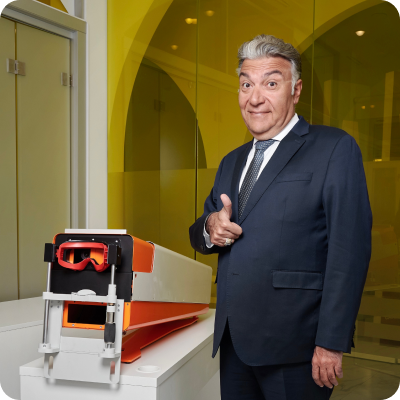
A true breakthrough in ophthalmology at the global level!
BOK-1 is a unique development by leading Russian ophthalmology scientist, Doctor of Medical Sciences, Academician of the Russian Academy of Medical and Technical Sciences, Professor Igor Aznauryan, designed for the treatment of amblyopia.
The assertion that amblyopia cannot be treated is fundamentally incorrect and outdated — yet, regrettably, still very widespread. At Crystal Vision we have been successfully treating amblyopia using BOK-1 for over 7 years, even in the most complex cases, including situations where as little as 1-2% of vision remains.
Treatment effectiveness using this device is four times higher compared to conventional methods. BOK-1 can treat any type of amblyopia in both the youngest and adult patients.
These examinations allow not only the exclusion of concurrent organic pathology (such as partial optic nerve atrophy and others), and the forecasting of potential vision improvement in each specific case, but also the determination of the parameters needed for maximally effective treatment.

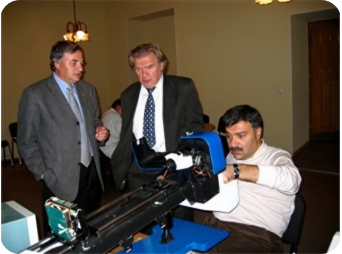
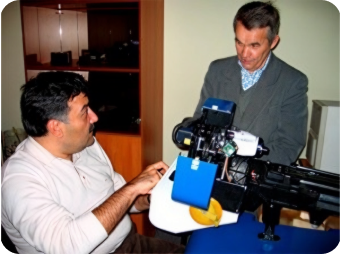
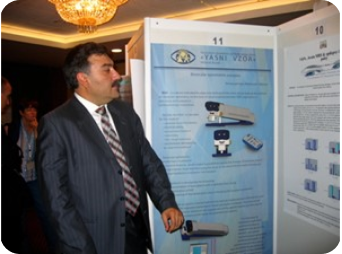
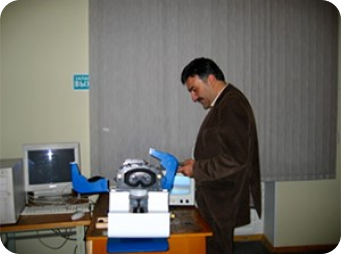

BOK-1 is designed for objective assessment of visual acuity using computerised optometry based on the registration of visual evoked potentials (VEPs), for use in both inpatient and outpatient ophthalmological settings.
In addition, the device is designed to assess absolute accommodation, fusional capacity, oculomotor balance, visometry, fine visual functions, and oculomotor disorders using objective methodology.
The Binocular Optometric Complex incorporates a number of design features that allow precise recording of functional changes and of visual perception during examination.
VEP parameters are analysed at each successive presentation on screen and compared with the preceding result. On this basis, an objective assessment of the patient's visual acuity is made — based not on the child's responses, but on objective data.
The computer programme is linked to the optical-mechanical component of the device and, depending on the objective assessment of visual perception, adjusts the spatial position of the monitor relative to the patient's sagittal axis, thereby adapting the visual system to the most comfortable viewing of the presented test objects.