


Paediatric cataract
Cataract is a condition that causes significant deterioration of vision and, if left untreated, can lead to blindness. In children, cataract is most commonly a congenital condition, though acquired forms also occur.
The congenital form is found in 1 in 20,000 newborns.
Causes of congenital cataract
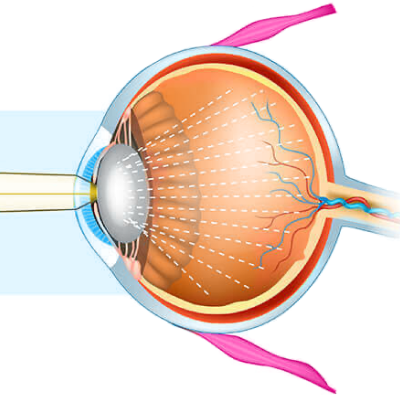
In cataract, the lens of the eye becomes cloudy and ceases to transmit light. The most common cause of congenital cataract is infectious disease in the mother during the first trimester of pregnancy (rubella, toxoplasmosis, herpes). Acquired cataract may develop following eye trauma, congenital glaucoma, or systemic conditions (Down syndrome, Hallermann-Streiff-François syndrome, Lowe syndrome, Marfan syndrome, Alport syndrome).
Symptoms of cataract in children
Parents should be aware that cataract in a child can only be diagnosed by an ophthalmologist — it is almost impossible to identify the condition at home independently. Therefore, it is so important to adhere to the schedule of paediatric ophthalmologist visits.
In newborns, we frequently identify strabismus that has developed secondary to congenital cataract.
In older children, cataract is accompanied by significant deterioration of vision — amblyopia ("lazy eye" syndrome). This occurs because the retina does not receive information about the surrounding world through the cloudy lens, and the eye consequently "fails to learn" to see. We have unfortunately encountered on more than one occasion situations in which, in the presence of congenital cataract, amblyopia was treated for years without success, rather than timely surgery being performed for the underlying condition.
Treatment of congenital cataract
We have developed a three-stage system for treating cataract in children:
The importance of selecting the correct intraocular lens for the child cannot be overstated. We implant an artificial lens immediately to replace the removed cloudy one, selecting specialist "paediatric" lenses that allow the child to achieve a rapid improvement in visual acuity post-operatively.
Unique technology: Binocular Optometric Complex
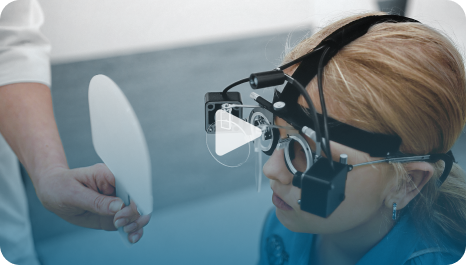
Post-operative conservative treatment is critically important for improving visual acuity and achieving full rehabilitation following surgery.
Thanks to our BOK-1 development, we are able to achieve excellent results in the post-operative period even when initial visual acuity is very low. In cases of high-degree amblyopia, it enables outstanding outcomes to be reached over a few treatment courses.
Prognosis
With timely surgery and courses of conservative treatment for cataract, we are able to avoid complications and blindness in 99% of children with both acquired and congenital cataract.
Myths and facts about cataract treatment in children
Types of cataract
Specialists identify four main types of cataract.
- Incipient cataract
- Immature cataract
- Mature cataract
- Hypermature cataract
By degree of maturity:
- Congenital cataract
- Acquired cataract
By time of onset:
- Toxic (caused by medications)
- Traumatic (resulting from mechanical eye injury)
- Radiation-induced (associated with exposure to X-rays or ultraviolet radiation)
By cause (acquired):
- Unilateral cataract (one eye affected)
- Bilateral cataract (both eyes affected)