


Chalazion treatment
Chalazion is a condition of the upper eyelid that causes the patient a lot of discomfort and trouble.
In common parlance, chalazion is known as a "hailstone" because it looks like a piece of hail that got into the eye — unpleasant, painful, and unsightly. When eye discomfort occurs, you shouldn't self-treat; it's important to quickly make an appointment with an ophthalmologist to identify the true cause of the disease.
Chalazion is often confused with a stye, so ineffective medications are chosen, and the recovery process drags on for a long period.

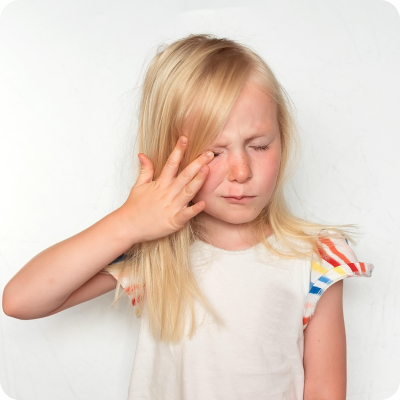
What is chalazion in a child?
Chalazion is a condition in which the meibomian glands become inflamed, get blocked, and accumulate secretion (contents), triggering an inflammatory response. A cyst-like formation develops in the middle tissues of the eyelid, which resolves quickly with proper treatment.
A stye occurs due to inflammation of hair follicles and is located in the upper layers of the glands. A stye usually resolves quickly (within a week if antibacterial and anti-inflammatory agents are used in a timely manner).
But chalazion on the eye doesn't resolve so quickly. Full tissue recovery can take up to 2 months if the cyst was small, responded well to treatment, and was able to resolve on its own. Otherwise, more radical methods are needed to fight chalazion on the eye.
Symptoms of chalazion
Chalazion in a child has pronounced symptoms, but if it's the first time it appears, it's easy to confuse it with a stye. When complaints arise, you need to see a specialist immediately — only they can make the correct diagnosis and prescribe therapy.
Symptoms of chalazion include:
- Formation of a "hailstone" on the eyelid
- Conjunctivitis
- Temporary deterioration in vision quality
- Swelling and redness of the lower eyelid
- Dryness and burning in the eye, "sand in the eye" sensation
- Itching, increased sensitivity, and tearing
Causes of chalazion in children
Chalazion rarely appears on its own and is often a consequence of some chronic inflammation or malfunction of internal organs.
Chalazion in a child is often associated with caries, tonsillitis, sore throat, local tonsil inflammation, gastrointestinal problems, metabolic disorders, bile secretion issues, or the presence of parasites.
To treat this condition, antibacterial therapy alone is not enough — it's important to identify the cause of reduced immunity and address it directly.
Chalazion on the eyes can recur due to weakened immunity or prolonged illnesses and is especially common in autumn and winter.
Complications of chalazion
Complications after chalazion directly affect visual acuity and eye health.
The most common complications in children are development of astigmatism, deformation of optic nerves and muscles, and the onset of "lazy eye" pathology.
All these significantly impair vision, forcing the patient to seek treatment from ophthalmologists: contact lenses, glasses, office-based correction, or even laser treatment.
It's surprising that one small "hailstone," which looks very much like a stye, can cause so many problems for the eyes, requiring intervention from competent doctors, time, and considerable expense for recovery.
DAVS — comprehensive vision treatment packages at an affordable price

Unique patented treatment methods using modern technologies are now available in a comprehensive format at an affordable price! Since most eye pathologies require regular procedures and systematic monitoring, Crystal Vision has created Russia's first comprehensive packages for full vision restoration. Contact Crystal Vision specialists and select your DAVS package.
Orthokeratology — selection of night lenses
This is a modern vision correction method that allows clear daytime vision without glasses or regular lenses. Crystal Vision offers a comprehensive program to slow myopia progression...
learn moreDiagnosis of chalazion in a child
Chalazion can only be diagnosed by an ophthalmologist through examination, medical history collection, and, if needed, biopsy analysis. These steps help distinguish it from other infections, determine the stage, and choose effective treatment.
How to treat chalazion
There are two ways to treat chalazion: conservative and surgical.
Conservative treatment is used for "hailstones" up to 5 mm if they haven't appeared before or respond to treatment within a month. Conservative chalazion treatment involves antibacterial therapy, anti-inflammatory ointments, and stopping contact lens wear. In extreme cases, medication is injected directly into the lesion.
Surgical intervention involves cyst removal under local anesthesia, requiring significant preparation and prolonged recovery. Surgical treatment (performing an operation) is a more effective method against chalazion, but people still prefer medications.
Laser vision correction
Did you know that seeing the world clearly with laser vision correction without fear or discomfort is a reality? At Crystal Vision clinics, we offer this opportunity not only to children but also to adults! We were also the first in Russia to introduce laser correction under medication-induced sleep.
learn moreClassification and stages of chalazion development
There are two types of chalazion: upper and lower eyelid. Upper eyelid chalazion is considered safer because it responds to treatment faster, causing only mild itching and a "speck" sensation.
Lower eyelid chalazion is harder to treat due to its proximity to the conjunctiva, which also becomes inflamed and causes additional discomfort. Sometimes a chain of "hailstones" forms, bringing chalazion discomfort to its peak, with the eye swelling so much it can barely open.
There are several stages of chalazion:
After full tissue cell recovery, the child's visual acuity normalizes.
Chalazion in children
The main cause of chalazion in children is weakened immunity and poor hygiene. Chalazion in children can result from physically introducing infection into the eyes — with sand, small debris, and dirt. Chalazion in a child is quite insidious — medication rarely gives the desired result, so in most cases, chalazion on the eye can only be cured surgically. Many ophthalmologists stick to conservative methods and continue prescribing antibacterial therapy, but its effectiveness is no more than 30%.
Chalazion in adults
Chalazion in adults is a rare phenomenon that occurs only with widespread inflammatory processes in the body. It often appears due to gastrointestinal problems, gastritis, or ulcers. Adults are also not immune to parasites, so this issue needs laboratory investigation as well.