


Dry eye syndrome
The eyeball is covered with a tear film that performs many functions.
First, it acts as a shield and protects the cornea from drying out and from microbes.
Second, it is important for proper refraction of light rays and clear vision.
Dry eye syndrome is quite common in today's gadget-filled world.
About 17% of young people suffer from this syndrome.
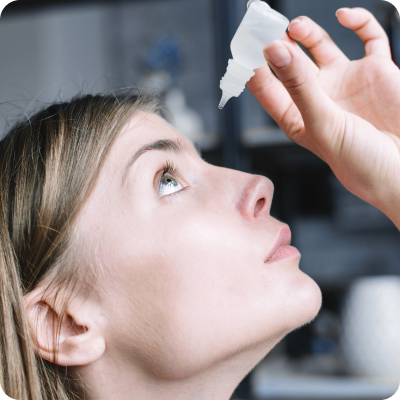
Circulatory laser stimulation of the lacrimal glands of the eyeball
This is related to the fact that we spend a lot of time working at the computer, on the phone, or on a tablet — this causes us to blink less often, and as a result the tear film covering the eyeball can break up, leading to a feeling of "sand" in the eyes, dryness, discomfort, and sometimes even burning. Another cause of dry eye syndrome can be long-term contact lens wear. Because of constant contact with the cornea, the lens disrupts the structure of the tear film and also causes considerable discomfort for patients who have been wearing contact lenses for years. Yet another cause of dry eye syndrome can be advanced age, when the function of the lacrimal glands is impaired and an insufficient amount of tear fluid is produced.
Treatment of dry eye syndrome
Symptomatic treatment of this condition is the instillation of tear substitutes — drops whose composition is close to natural tears, but they only perform a replacement function and must be used all the time.
An excellent alternative is physiotherapeutic treatment (circulatory laser stimulation of the lacrimal glands). This is a painless and quite quick procedure which, over 10 days, will restore the damaged tear film, normalise its composition, and "make" the lacrimal glands work.
The procedure lasts about 3 minutes for each eye. In the course of treatment, tear production is measured using a special test. At the end of the 10‑day course, the doctor will explain which measures should be taken to prevent dry eye syndrome from recurring.