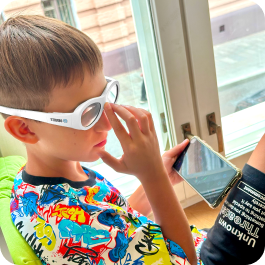


EPR — electrophysiological examination of the eyes
Purpose:
EPR is used for objective assessment of visual analyser function, receptor sensitivity, and optic nerve conduction — particularly when pathology of the retina or optic nerve is suspected, as well as in cases of strabismus and for the detection of meridional amblyopia.
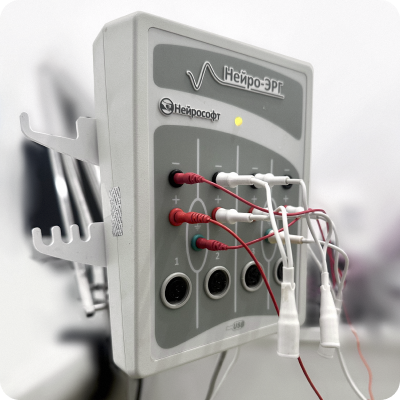
EPR encompasses the examination of visual evoked potentials (VEPs) and electroretinography (ERG).
The full electrophysiological examination of the eyes is available at the specialist Crystal Vision eye clinics, including the Shchyolkovo and Neglinnaya locations. The examination is performed in both children and adults.
Indications for EPR in children:
- Poor visual fixation or response to objects, particularly in early infancy
- Suspected congenital conditions of the visual system
- Lazy eye or amblyopia
- Strabismus
- Nystagmus
- Neurological conditions
- Head or eye injuries
Recommendations may vary depending on the type of electrophysiological examination.
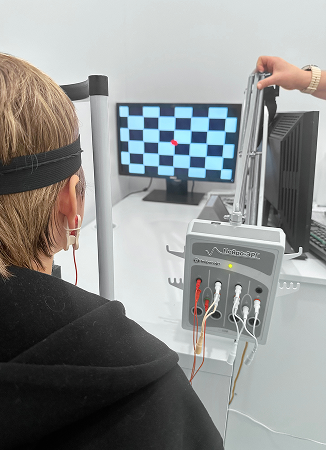
All examinations at Crystal Vision clinics are adapted for children. Our doctors apply a specialised approach, including when working with children with developmental differences.
EPR is painless and safe for the child. It is performed in a darkened room: the child is shown flashes of light or images, while sensors record the response of the visual system. The entire procedure takes approximately 30–40 minutes.
EPR can detect even hidden vision problems and allows treatment to begin in good time, preserving the child's ability to see the world in sharp, vivid detail. If an ophthalmologist recommends this examination, do not delay — eye conditions respond best to treatment in childhood, during the so-called "sensitive period".