


Treatment of strabismus in children
Dear parents, have you ever noticed that your little one's eyes sometimes seem to drift apart? This is not simply an individual trait — it is how strabismus (the medical term is squint) manifests. And it is absolutely not something to hope the child will grow out of.
Strabismus very frequently leads to other vision conditions, causing deterioration of vision and, on top of this, causing the child to perceive the world as flat rather than three-dimensional! And please remember: strabismus never resolves on its own!
At Crystal Vision clinics, however, we successfully treat both strabismus itself and its complications.
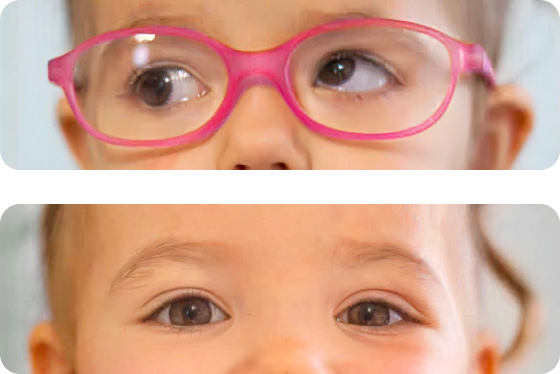
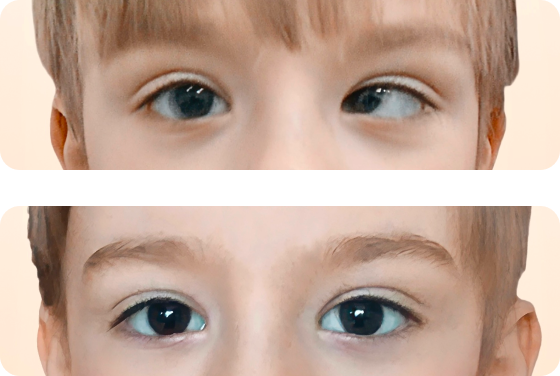
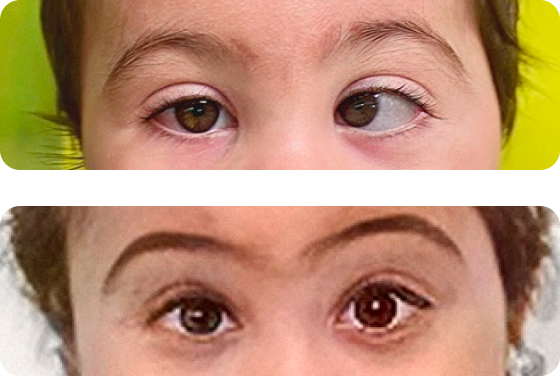
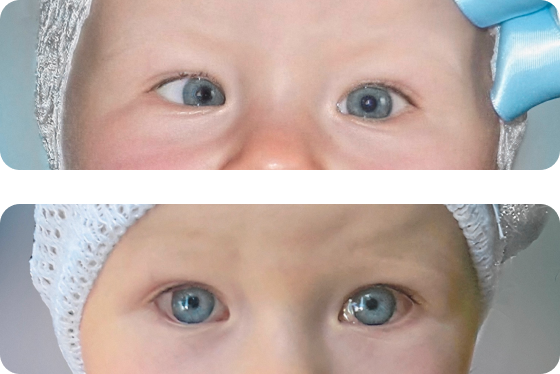
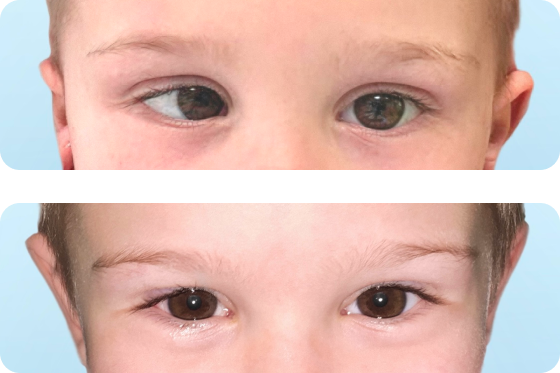
Crystal Vision's strabismus treatment outcomes are among the best in Russia and internationally!
For over 25 years, thanks to our unique technologies, highly qualified doctors, and adherence to international standards of medical care, we have maintained a leading position in ophthalmology.
 Experienced surgeons
 State-of-the-art pre-operative diagnostics
 Innovative STRABO Care System for strabismus treatment and diagnostics
 Internationally certified clinic
 Minimally traumatic procedures
 High-frequency radio wave surgery
 STRABO soft mathematical surgical modelling for strabismus and nystagmus
 Reduced recovery times
What does strabismus mean for a child?
Strabismus in children is not simply a cosmetic problem.
In strabismus (also known as squint), the function of all divisions of the visual analyser is disrupted — from the periphery to the visual centres of the cerebral cortex — with serious functional impairment of the entire visual and oculomotor system of the child.
Vision is also affected, from its acuity (and glasses do not help in this case) to the ability to perceive the world in three dimensions (binocular vision).
When should treatment begin?
Treatment of strabismus in children must begin as early as possible, since the child's visual system forms up to the age of 4 and is fully complete by the age of 6.
This is the most adaptable period, during which the correct formation of the visual system can be influenced with maximum effectiveness. For primary strabismus with timely treatment, full rehabilitation using our technology takes from 3 months to one year. In complex and neglected cases, the recovery time increases considerably.
By school age, the child with strabismus should be as fully rehabilitated as possible. In older children, a significantly longer time is required to improve visual function, and in some cases full recovery may not always be achievable.
Strabismus treatment at Crystal Vision
Treatment of strabismus typically begins with surgery.
But it is very important to understand: surgery only straightens the eyes — it does not restore visual function. However, once the eyes begin to look straight, conservative treatment becomes effective, and it is through this that we restore all the disrupted visual functions.
Our strabismus diagnostic methods
Gazelab video-oculograph
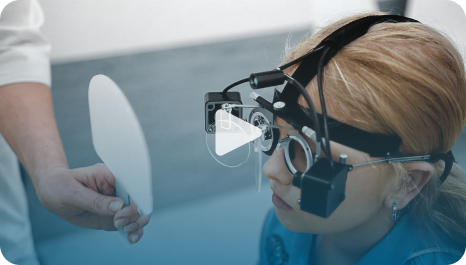
Examination using the Gazelab device allows precise determination of the angle of strabismus under natural conditions, in all directions of gaze (upward, downward, into the distance, etc.) — essential for selecting the most effective treatment approach, calibrating therapeutic devices, and determining the patient management strategy. In paralytic strabismus, Gazelab assesses ocular motility, which is necessary for accurate surgical planning and monitoring post-operative recovery.
This approach ensures high precision in the treatment of both strabismus and nystagmus.
Comprehensive in-depth vision diagnostics in all planes
For full details of all diagnostic methods at Crystal Vision, please visit the relevant page.
The decision on whether to proceed with surgery is always made individually.
Only the paediatric ophthalmic surgeon monitoring the child can determine its necessity.
85% of all cases — regardless of whether the strabismus is congenital or acquired, constant or intermittent — require a surgical stage for full rehabilitation. The surgical technique depends on the type of strabismus: we have 12 different surgical approaches, and the choice or combination depends on the specific case of muscle imbalance between the extraocular muscles.
Strabismus surgery is performed to achieve symmetrically straight eye alignment. If surgery is indicated, it should not be delayed.
The earlier surgery is performed, the sooner conditions are created for improving visual acuity and fully rehabilitating the child.
Our surgical techniques for strabismus

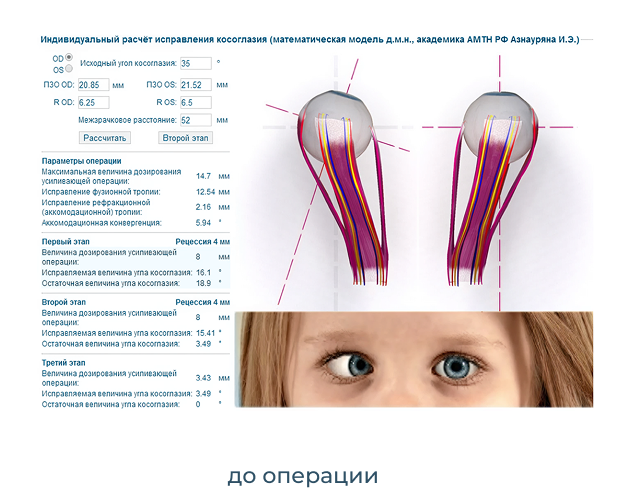
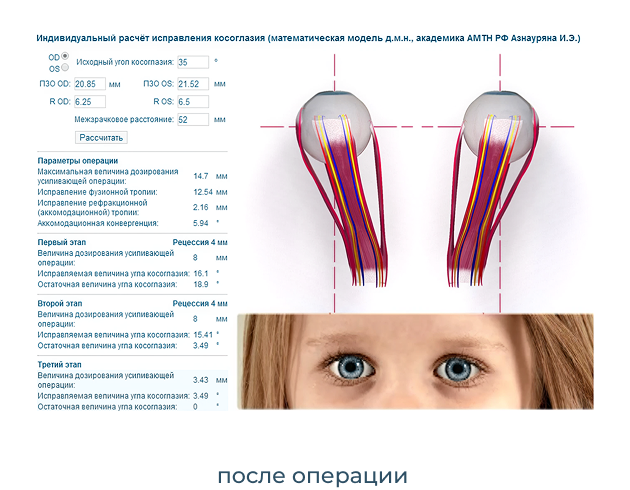
Mathematical surgical modelling
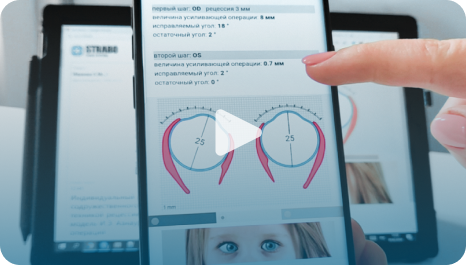
We have developed and introduced the STRABO method of individual mathematical modelling for strabismus surgery in both children and adults, enabling surgical precision to be calculated to a fraction of a millimetre.
This allows symmetrical eye alignment to be achieved, taking into account the unique anatomical characteristics of each patient. STRABO technology also allows the patient and their family to see clearly how the eyes will look after surgery, helping them to better understand and make a decision about treatment.
Furthermore, modelling helps reduce the number of surgical stages and the number of operations required, significantly facilitating and accelerating recovery.
Using this programme allows not only precise calculation of the scope of surgery, but also minimisation of the number of operations required. The planned outcome can be shown to parents before the procedure takes place.
Surgical technique
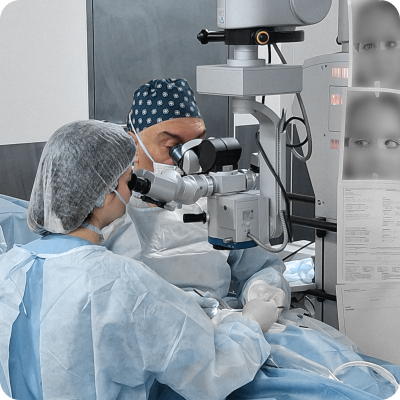
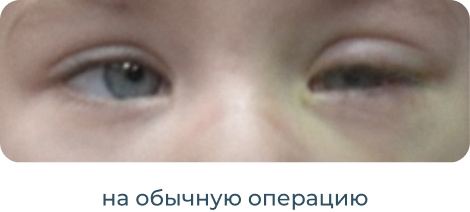
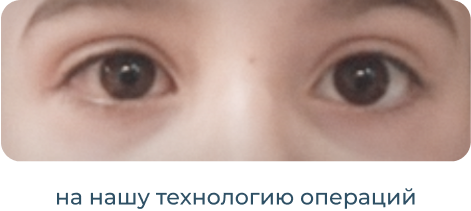
Alongside STRABO technology, we use high-frequency radio wave surgery for strabismus.
This is the most advanced, safe, and precise technology in the world for the surgical treatment of oculomotor disorders, recognised by our colleagues — paediatric eye surgeons internationally.
We have moved away from traditional scalpels and scissors in favour of radio wave technology. We do not cut or suture; we preserve the structures of the eye.
High-frequency radio wave surgery allows us to:
- Minimise surgical trauma in the correction of oculomotor disorders
- Ensure the highest precision in surgery
- Reduce the rehabilitation period fivefold to sixfold
- Preserve vascular and neural bundles intact
- Achieve healing without scarring or tissue changes
Eye response
Conservative treatment of strabismus
Strabismus can be treated without surgery; however, all conservative methods are considered supplementary. They are typically effective only as adjunctive treatment, preparation for surgery, or post-operative rehabilitation.
These approaches are divided into the following categories:
- Pleoptic treatment: stimulation of the functions of various divisions of the visual system, from the retina and optic nerve to the cerebral cortex, including through pharmacological procedures.
- Optical correction: prescription of glasses and use of glasses according to a specific algorithm during and after treatment.
- Optical correction (glasses or contact lens fitting)
- Comprehensive strabismus treatment within the DAVS STRABO package
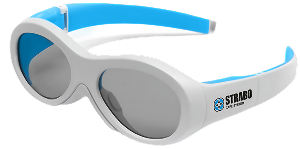
- Restoration of binocular vision, and treatment of amblyopia and strabismus using STRABO liquid crystal glasses
Pleoptic treatment is aimed at stimulating the weaker eye and includes:
- Electromagnetic stimulation — improves blood supply to ocular tissues.
- Laser stimulation — provides physiological stimulation of the retina, which may help correct strabismus.
- Electrical stimulation — improves metabolic processes and blood flow, stimulating the activity of ocular structures.
- Light-colour stimulation — uses light of a specific spectrum to activate visual function.
- Reflexotherapy — restores visual balance through stimulation of active points, often using orbital acupuncture devices.
- Vibromassage — mechanically stimulates the eyes through the eyelids to improve circulation and relieve tension.
Orthoptic treatment helps coordinate the work of the eyes using:
- Synoptophore — trains the brain to combine the images from each eye into a single three-dimensional image.
- Computer programmes — games and exercises designed to improve visual skills.
- Binarimeter — teaches separation of visual fields, which may be useful for treating strabismus in children without surgery.
- STRABO oscillating liquid crystal glasses — help develop binocular vision through alternating stimulation of the eyes, and can be used at home.
Classification and symptoms
Forms of strabismus:
- Concomitant
- Convergent
- Divergent
- Congenital
- Paralytic
- Constant
- Intermittent
- Vertical
- Monocular
- Alternating
Typical symptoms present in all forms of strabismus:
- Reduced visual acuity
- Diplopia (double vision)
- Impaired coordination
- Loss of three-dimensional vision
- Headaches and dizziness
In the presence of strabismus, vision in the deviating eye gradually deteriorates — sometimes significantly — making correction mandatory.