


Computerised perimetry
Computerised perimetry is performed to examine the visual field in order to detect defects within it and determine its boundaries.
Computerised perimetry is an accurate and reliable method for examining the visual field using moving or stationary stimuli, and for determining light sensitivity at each point.
The visual field is the area of space perceived by the eye with a stationary gaze. In the presence of certain conditions, a narrowing of the visual field boundaries may be observed, and isolated areas of the visual field may be lost — giving rise to so-called "scotomas" in the viewed space.
Perimetry identifies the location, size and depth of a visual defect, and diagnoses early-stage impairment of retinal sensitivity, optic nerve function, and visual conduction pathways.
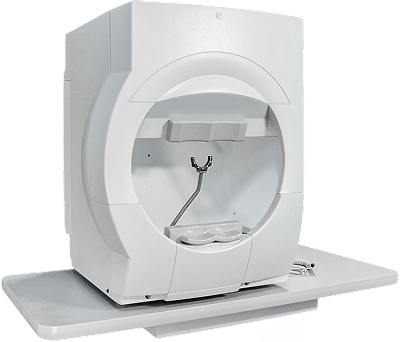
Ophthalmologists are able to detect the following conditions using perimetry
- Glaucoma
- Retinal pathology
- Myopia
- Retinal detachment
- Neoplasms
- Optic nerve pathology (inflammatory and vascular)